info@monitoo.com
info@monitoo.com
info@monitoo.com

Productivity , Home Office , Efficiency
13 de May de 2026 - 15h05m
Share
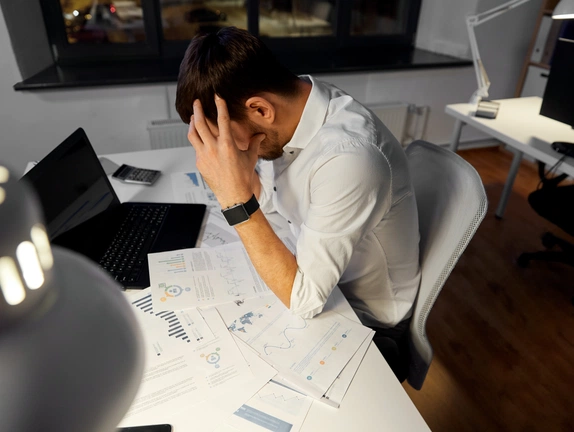
Have you ever finished a workday completely exhausted… but with the feeling that you barely accomplished anything?
You replied to messages.
Attended meetings.
Opened dozens of tabs.
Switched tasks constantly.
Handled small emergencies.
Checked your phone “just for a second.”
Opened Instagram for 2 minutes.
Went back to work.
Then suddenly realized it was already nighttime.
And then comes the sentence that defines the reality of millions of professionals in 2026:
“I worked all day and don’t know where the time went.”
That feeling is not laziness.
It’s not a lack of discipline.
And in most cases, it’s not a lack of competence either.
The problem is much deeper:
we are living in the first generation in history where human attention became a product.
Companies compete for every second of your concentration.
Notifications compete with important tasks.
Apps are designed to create dependency.
And modern work has started operating in a permanent state of interruption.
The result?
The most dangerous part is that this happens invisibly.
Most people believe they are working hard.
But in practice, they spend the entire day switching attention.
And switching attention is not productivity.
In this complete guide, you’ll understand:
And most importantly:
how to stop ending the day feeling busy… but not making real progress.
For decades, productivity was associated with physical effort.
Whoever worked more hours seemed more productive.
But modern work has completely changed.
Today, most professions depend on:
In other words:
the most important asset in today’s economy is human attention.
And that is exactly what is being destroyed every single day.
According to data published by AppBlock, millions of people constantly struggle to maintain focus due to excessive digital distractions. The company states that users can significantly reduce screen time and recover up to 3 hours per day by limiting digital distractions.
This reveals something important:
The problem is not simply “using your phone too much.”
The problem is living in an environment designed to interrupt you constantly.
When people think about productivity loss, they usually imagine major distractions:
But reality is usually much more subtle.
Time disappears through micro interruptions.
Examples:
Each interruption seems small.
But together throughout the day, they completely destroy deep focus.
There’s an extremely dangerous corporate myth:
“Productive people do several things at the same time.”
In reality, the human brain does not perform true multitasking for most cognitive activities.
It switches contexts.
And every context switch has a mental cost.
That means:
every time you leave a task to check WhatsApp, Instagram, Slack, email, or another tab, your brain must:
This process feels instant.
But it isn’t.
The result is a massive consumption of cognitive energy.
That’s exactly why so many people end the day mentally drained without feeling they accomplished anything truly important.
There’s a huge difference between:
But the modern market has confused the two.
Today, many people associate productivity with:
But constant availability destroys deep productivity.
Highly efficient professionals usually do the opposite:
The problem is that most companies still reward reactive behavior.
And reactive behavior creates the feeling of movement.
Not necessarily results.
Big digital platforms are not only competing for users.
They compete for minutes.
Every app is designed to maximize retention.
Notifications.
Infinite scrolling.
Short videos.
Instant rewards.
Constant updates.
All of this activates psychological mechanisms linked to dopamine and compulsive behavior.
According to content published on the AppBlock Blog, the modern problem is not a lack of planning, but an excess of distractions competing for human attention.
That explains why so many people grab their phones “just for a second” and lose 40 minutes without noticing.
The modern brain lives in a state of continuous stimulation.
And that completely changes our ability to concentrate deeply.
When your brain constantly switches tasks, it loses cognitive continuity.
You enter a state of fragmented attention.
In this state:
That’s why many people end the day feeling:
“I did a lot… but didn’t move forward on anything important.”
Because shallow activities consume time without generating meaningful progress.
A single notification seems harmless.
But it creates:
Even when you don’t respond immediately.
Your brain still registers that interruption.
Now imagine that happening:
It’s no surprise that so many people struggle to maintain prolonged concentration.
Many companies still believe productivity means:
But hyper-reactive environments drastically reduce the quality of intellectual work.
The problem is not only individual.
It’s structural.
Modern teams often live in:
And very little deep execution.
This is an important point.
The problem isn’t just Instagram or TikTok.
Many productivity losses happen inside work itself.
Examples:
In many cases, professionals spend the entire day working…
but almost no time producing in a true state of focus.
The concept of “Deep Work” has become extremely relevant in recent years.
Deep work means:
periods of intense concentration without interruptions.
This is where:
are born.
But the modern digital environment practically eliminates this state.
Most people spend the entire day working in “shallow mode.”
Modern apps exploit instant rewards.
Every notification creates a small expectation.
Every new piece of content creates stimulation.
Every update releases tiny mental rewards.
This makes deep tasks feel “difficult” or “boring.”
Your brain starts preferring:
And loses tolerance for prolonged focus.
Many people think they’re tired because they work too much.
But often they’re exhausted because they:
In other words:
it’s not just the amount of work.
It’s the quality of attention.
There’s a massive difference between:
Many tasks create the psychological feeling of productivity without generating real impact.
Examples:
All of this creates movement.
But movement does not mean progress.
Most people can’t answer simple questions like:
And that’s the problem.
You can’t improve what you can’t see.
The productivity market has changed dramatically.
Before, tools focused mostly on:
Today, the main focus has shifted toward:
According to the article “Best Productivity Apps in 2026” published by the AppBlock Productivity Blog, modern productivity depends more on protecting attention than on traditional planning alone.
This represents a massive shift.
Because the market is finally understanding:
the biggest modern problem is not a lack of tools.
It’s an excess of distractions.
The feeling of ending the day without knowing where the time went does not happen by accident.
It’s the consequence of a digital environment designed to constantly fragment your attention.
The problem is not just a lack of discipline.
It’s too many interruptions.
Too much stimulation.
Too much context switching.
Too much information.
We live in an era where focus has become rare.
And precisely because of that, focus became a competitive advantage.
People and companies that learn how to protect attention will have:
Real productivity does not come from working nonstop.
It comes from the ability to direct attention toward what truly matters.
Sources: Best Productivity Apps in 2026: Which App Actually Fits Your Problem?


 Talk to us
 Request free trial